


Free 1:1 mentoring
The market is falling. Panic or opportunity?
Big market sell-offs have, time and again, been big opportunities for those who showed up with a plan. In a free 1:1 session we help you build yours and practice it in a demo, without risking your money.
Book your session
We'll message you on WhatsApp to set a day and time.
- 30-minute video call session, at no cost
- 3 ways to buy the dip with clear rules
- You practice in a demo before risking your money
Risk Warning: Your capital is at risk.
The idea
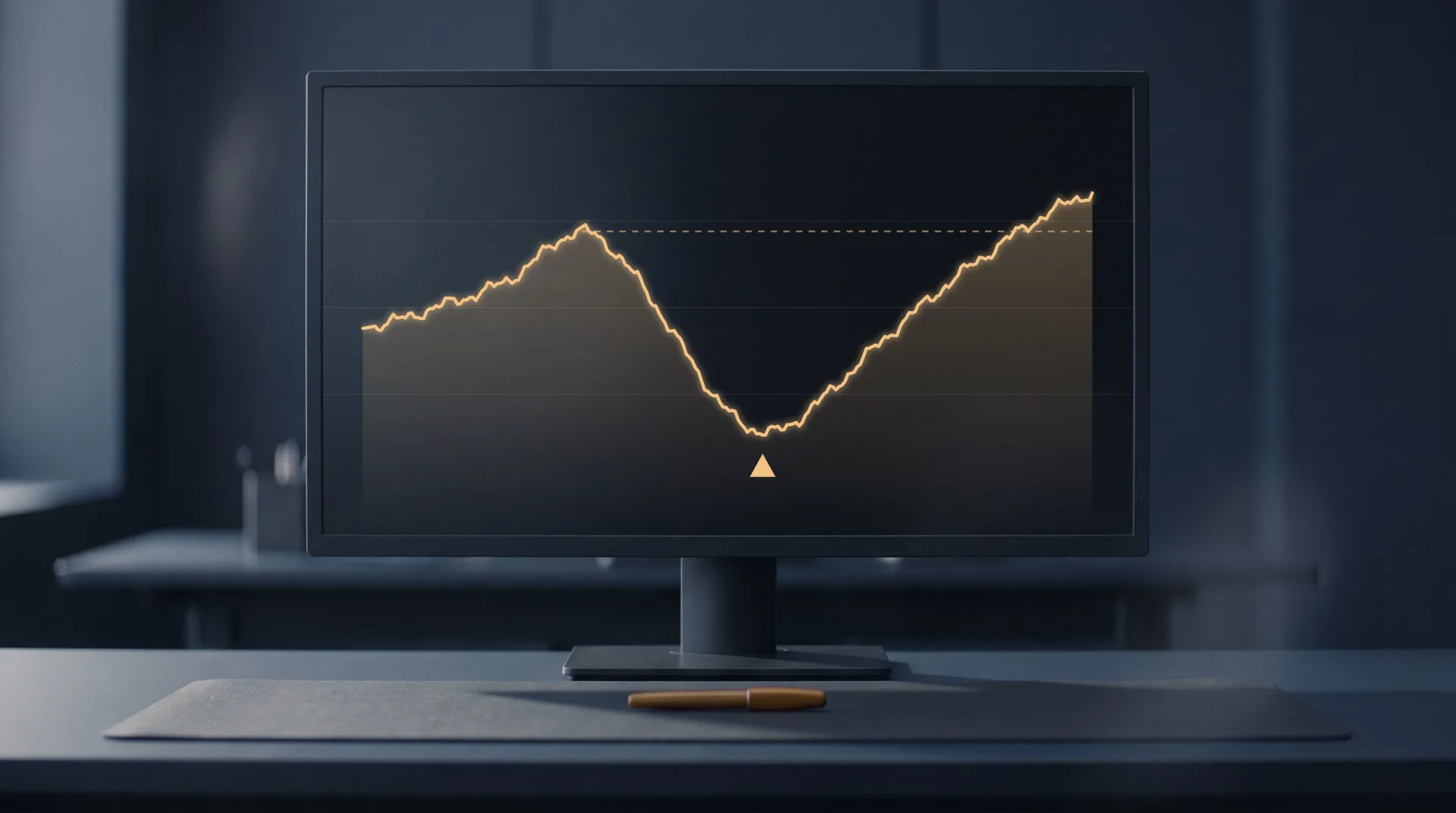
Dips can't be guessed. They're prepared for.
Nobody knows where the bottom is. What you can decide ahead of time is how much you'll risk, at which levels you'll enter and what you'll do if the price keeps falling. That's a plan, and it's what separates an opportunity from a hard knock.
What history says
The big sell-offs and what came next
Four sharp falls in US indices. Three returned to their high within months or a few years. One took fifteen.
- 2008S&P 500
−57%
Financial crisis
- Drop
- Oct 2007 → Mar 2009
- New high
- March 2013
From the bottom, the index more than doubled in value by 2013. Anyone who bought at the 2007 high waited more than five years to break even.
- 2020S&P 500
−34%
Pandemic
- Drop
- 19 Feb → 23 Mar 2020, 33 days
- New high
- 18 August 2020
The shortest bear market in its history. The record returned about five months after the bottom.
- 2022S&P 500
−25%
Inflation and rates
- Drop
- 3 Jan → 12 Oct 2022
- New high
- 19 January 2024
A slow, nine-month fall while rates were rising. The record returned about fifteen months after the bottom.
- 2000Nasdaq Composite
−78%
Dot-com bubble
- Drop
- Mar 2000 → Oct 2002
- New high
- 23 April 2015
Buying “cheap” in 2001 wasn't enough: it kept falling and took 15 years to get back to its high. That's why what you buy, how much you risk and how you enter all matter.
Data: S&P 500 and Nasdaq Composite, daily closing prices, excluding dividends and inflation. Past performance does not guarantee future results. Mentioning an index is not a buy recommendation.
Why it can be an opportunity
What changes when the market falls hard
Prices fall faster than value
In a panic everything gets sold together, the good and the bad. Assets that changed little underneath can end up quite a bit cheaper than a few weeks ago.
Fear exaggerates the moves
Forced selling, margin calls and alarming headlines push the price further than the data justifies. That excess is what dip buyers look for.
There's more movement
Volatility rises and daily ranges widen: more possible entry points, and also more risk per trade. That's why position size matters more than ever.
And why it can also be a trap
- Nobody knows where the bottom is: what looks cheap can get cheaper.
- Not everything comes back. Broad indices have historically recovered; a single company may never do so.
- With leverage, a fall that continues can close your position before the rebound arrives.
3 ways to buy the dip
Buying the dip, with rules
None of them guesses the bottom. All three have something in common: before entering, you've already decided how much you risk and what takes you out of the trade.
- 01
In stages
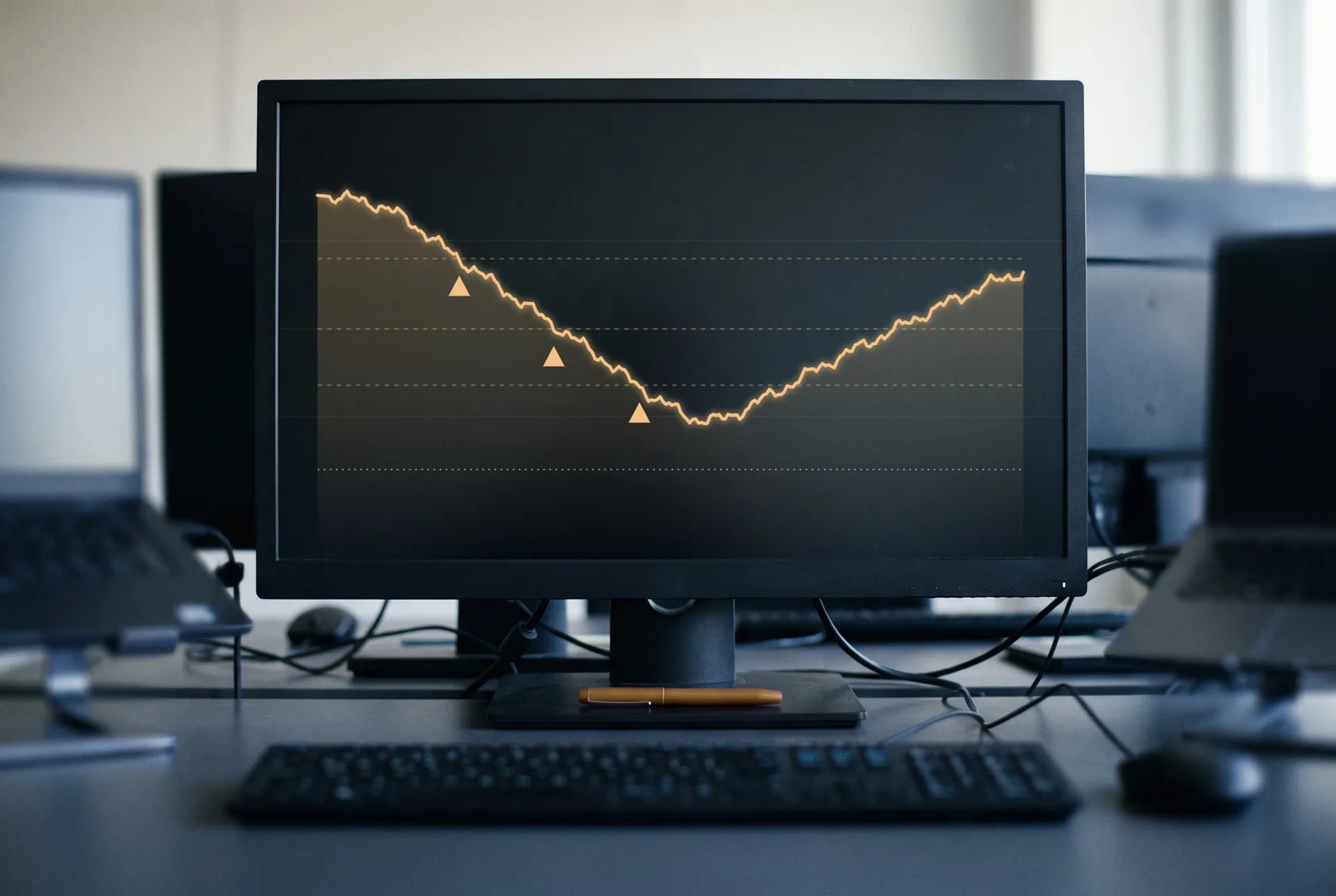
Instead of going in all at once at a single price, you split your size into parts (for example, three) and set in advance the level where each one enters. If the fall continues, the later entries come at a better price; if it rebounds soon, you already have a part in.
The rule
The combined risk of the three parts doesn't exceed the maximum you set for that idea. - 02
With confirmation
You don't buy while the price is falling. You wait for it to stop making lower lows, or to recover a level it had lost. You enter later and at a worse price than the bottom, but with evidence that the selling pressure has run out.
The rule
The stop goes below the last low. If the price breaks it, the idea was wrong. - 03
At zones
You look for zones where the price has reacted before (previous lows, round numbers, areas where it stalled several times) and prepare your entry there, not at just any point of the fall.
The rule
A zone is not a wall. You define which price invalidates it, and your stop goes there.
To study zones, use the Arco Levels.
Before buying any dip
The rules that separate an opportunity from a trap
Do this
- Decide how much you risk per idea before you enter. Many traders use 1% of the account or less.
- Place the stop when you enter, not afterwards.
- Calculate your size with the Arco calculator: the size comes from the stop, not the other way around.
- Practice the strategy in a demo for weeks before using real money.
- Log every entry in a journal: why you entered, where, and what happened.
If you trade CFDs, be clear on this
- A CFD doesn't make you the owner of anything: you trade the price change, with leverage.
- Leverage magnifies losses just as it does gains. In a fall that continues, it can close your position through margin.
- Holding a position open for several days usually carries an overnight financing cost (swap).
- On panic days the price can gap: a stop doesn't guarantee execution at the exact price.
- This page is educational. It is not a buy or sell recommendation or investment advice.
How the mentoring works
From the dip to a plan, in three steps
- 01
Leave us your details
Name, WhatsApp and your experience. We'll message you to set a day and time.
- 02
Build your plan in 30 minutes
By video call: how much to risk, which entry approach you want to practice and how to measure it.
- 03
Practice it in a demo
With virtual money and no deposit. You take the next step only when your plan works in the demo.
Frequently asked questions
What everyone asks
Is it a good time to buy?
We don't know, and nobody knows for certain. Arco doesn't give buy or sell recommendations. What we do is teach you to prepare a plan for when the market falls and to practice it in a demo.
Is the mentoring really free?
Yes. It's part of the academy. Arco may receive compensation from HFM if you later decide to open a real account, but that is never a condition for the session and it doesn't cost you more.
Do I need money to start?
No. You start on a demo account, with virtual money and no deposit. Moving to a real account is your decision, after practicing.
Are you going to tell me what to buy?
No. We talk about method: how much to risk, how to enter and when to exit. The decisions about your money are yours.
What happens if the fall continues after I buy?
That's what the plan is for. If you entered in stages, you have pending entries at a better price; if the price hits your stop, you exit with a loss you accepted in advance. What shouldn't happen is improvising.
What if I want to invest for the long term?
Buying a dip to hold for years is something else. With a CFD you don't own the asset and keeping the position open usually costs money every night, so it isn't the typical product for the long term. In the session we explain the difference.
Free 1:1 mentoring
Build your plan for the next dip.
Leave us your details and we'll message you on WhatsApp to schedule 30 minutes by video call. You leave with your plan in writing and your demo ready to practice it.
- 30 minutes by video call
- Your plan for buying dips, in writing
- Demo account ready to practice
Risk Warning: Your capital is at risk.